Plate III · The hillside
The Stierkopf: a thousand-year-old hillside in Mutzig
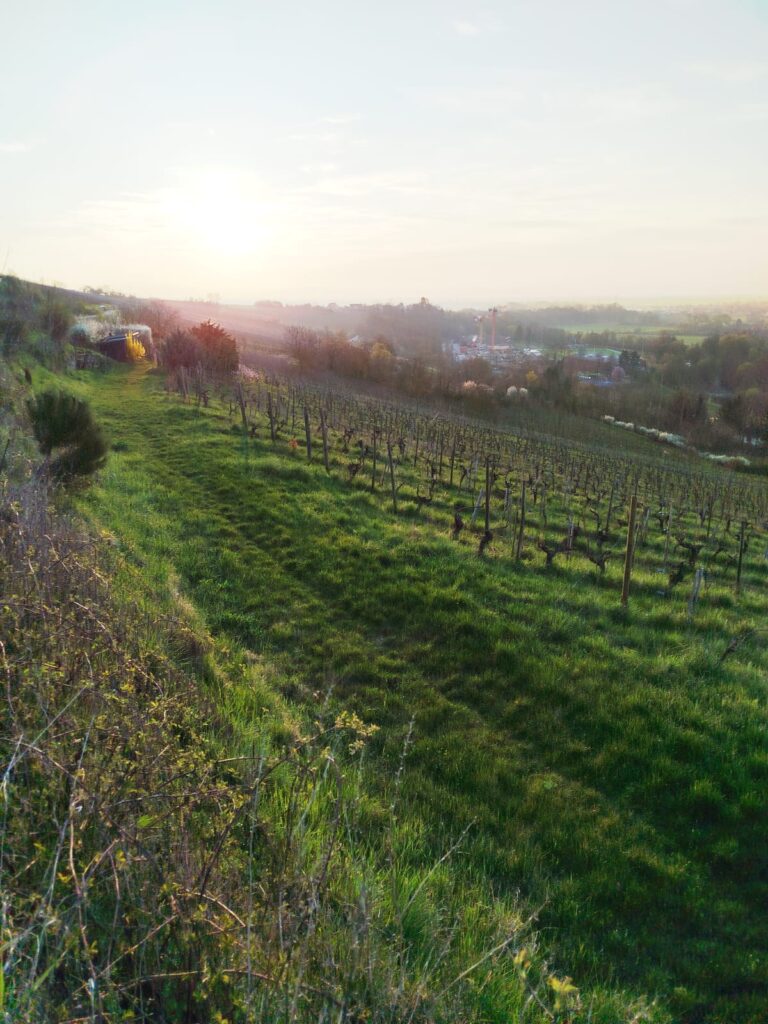
A lieu-dit first recorded in the year 916, a steep, due-south slope on a Muschelkalk subsoil of marl, limestone and sandstone. Since February 2026, l'ambre blanc has been its keeper, for 4 planted hectares.
A thousand years of winegrowing
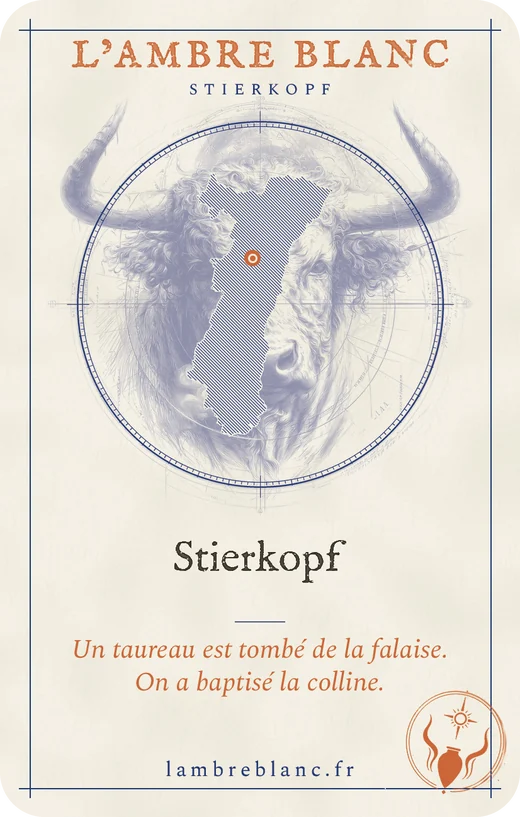
“Stierkopf”, the bull's head, is one of the oldest wine sites in Alsace. Local legend says a bull fell to its death at the foot of the cliffs on the eastern edge of Mutzig, and gave the place its name.
First written records
The Stierkopf is listed as a property of the Bishop of Strasbourg, one of the oldest wine sites in Alsace.
A golden age
The Mutzig winegrowers' guild becomes one of the most powerful in the region. The Rohan prince-bishops, living in the nearby castle, help the vineyard flourish.
Twenty hectares, and a replanting
Phylloxera, successive wars and the rural exodus have shrunk the Stierkopf to about twenty hectares. That year the Rieslings were planted that give l'ambre blanc its wines today: seventy-three years of memory in this soil.
Le Relais Stierkopf
A social enterprise takes over the plots and farms them organically for more than a decade.
L'ambre blanc becomes its keeper
In February 2026, 4 hectares of the Stierkopf are entrusted to l'ambre blanc. Not a purchase: a keeping. First estate harvest in autumn 2026.
A steep hillside at the mouth of the Bruche valley: a slope that shelters as much as it exposes.
Geology: marl, limestone and sandstone
The Stierkopf sits on a Muschelkalk subsoil where marl, limestone and sandstone mix, typical of this strip where the Vosges tip down towards the Rhine plain. The steep slope keeps the vines well aired and brings the grapes to a generous ripeness.
Lie of the land
The hillside faces due south at the mouth of the Bruche valley, right by the river. On the plots l'ambre blanc works, altitude runs from 150 to 300 metres, a difference that bears directly on the ripeness and freshness of the grapes.
Late summers are warm, fairly sheltered from oceanic influence: remarkable ripening conditions for living wines.
The plots
L'ambre blanc farms 4 hectares on the Stierkopf, across the lieux-dits Reitling, Leh, Steingrub and Weingarten.
Grape varieties, largest first
Sylvaner
85.39 ares · 22.2% of the planted area.
Pinot Noir
82.56 ares · 21.5%: Burgundian massal selections, cordon de Royat.
Riesling
68.62 ares · 17.8%: planted in 1953, seventy-three years of memory in this soil.
Pinot Blanc
61.87 ares · 16.1%.
Gewurztraminer
60.33 ares · 15.7%.
Pinot Gris
25.74 ares · 6.7%.
Massal selection, pruning and soil
The whole vineyard is grown from massal selection: vines drawn from the hillside's own genetic diversity rather than a single clone. Pinot Noir is trained in cordon de Royat, a low form that keeps the vine in balance; so are the Sylvaner, part of the Pinot Blanc and all of the Pinot Gris. Riesling gets a physiological pruning that lets it lengthen. Only the Gewurztraminer is trained entirely in Guyot. Everywhere, pruning is done with hand shears: each cut follows the flow of the sap and never severs it where it runs.
The soil is not worked. Plant-protection treatments are kept to a minimum, and l'ambre blanc is gradually bringing in herbal teas and plant decoctions to support the vines, as well as eco-grazing: practices that take the time they take.
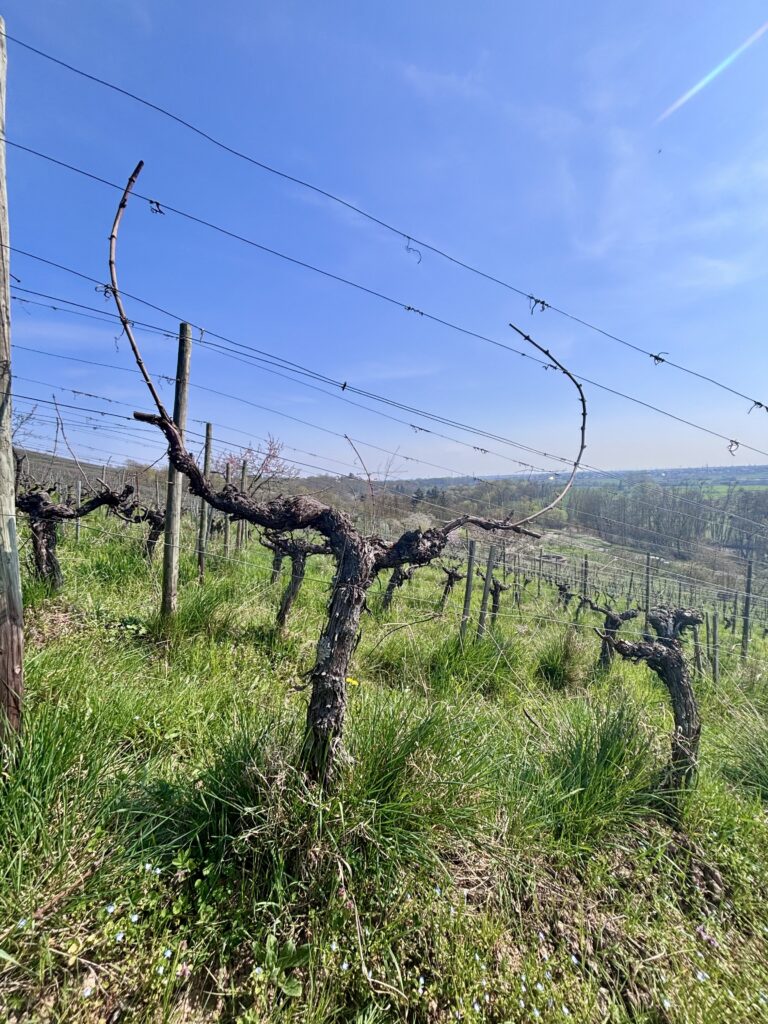
Agroforestry and biodiversity
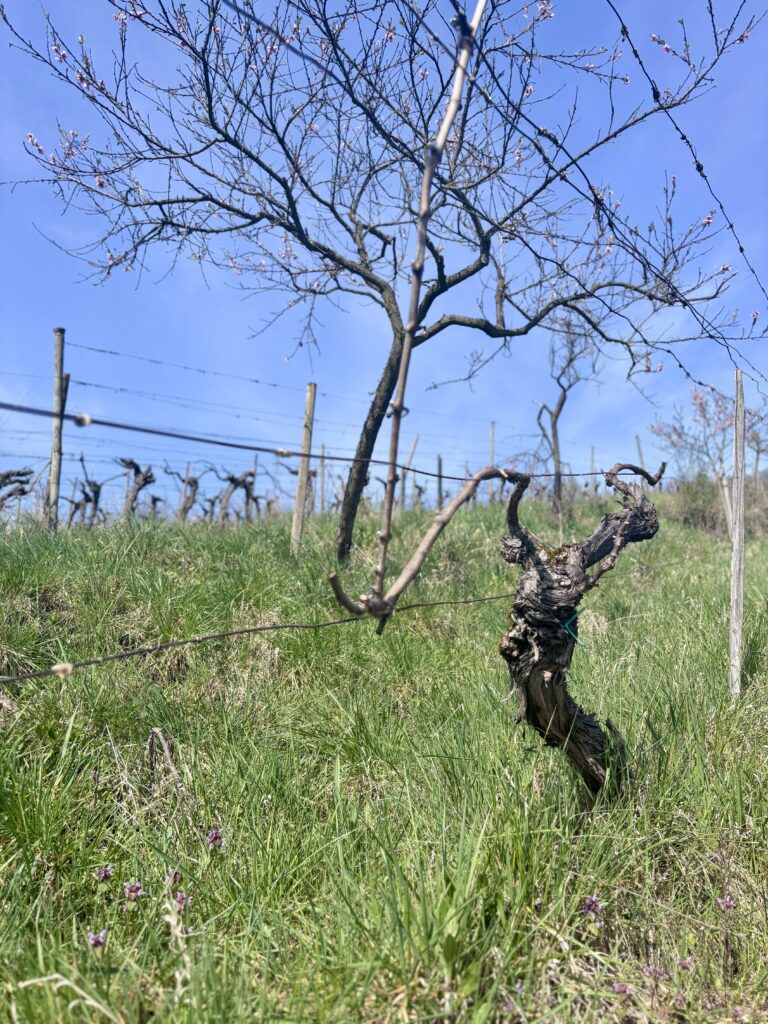
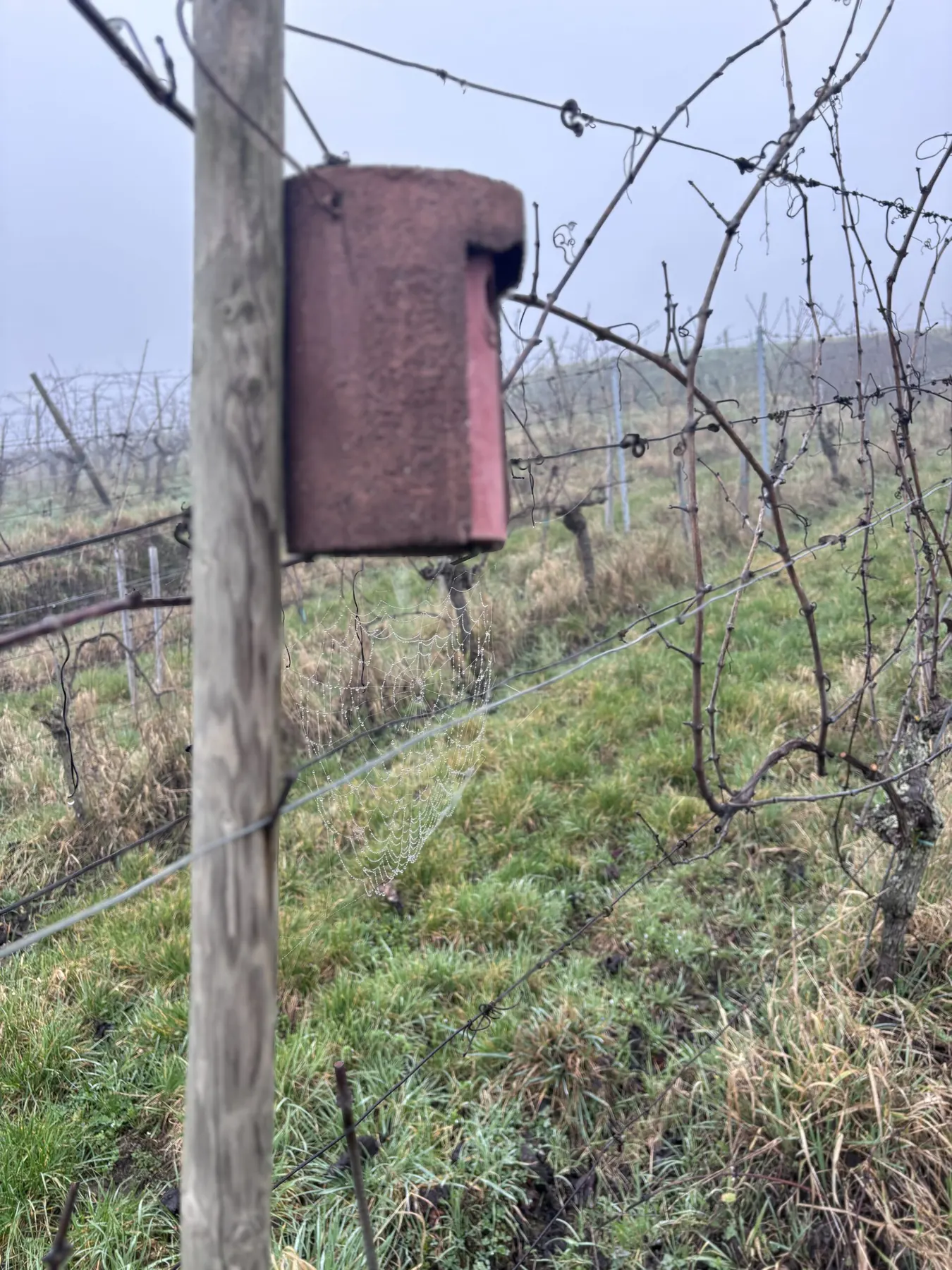
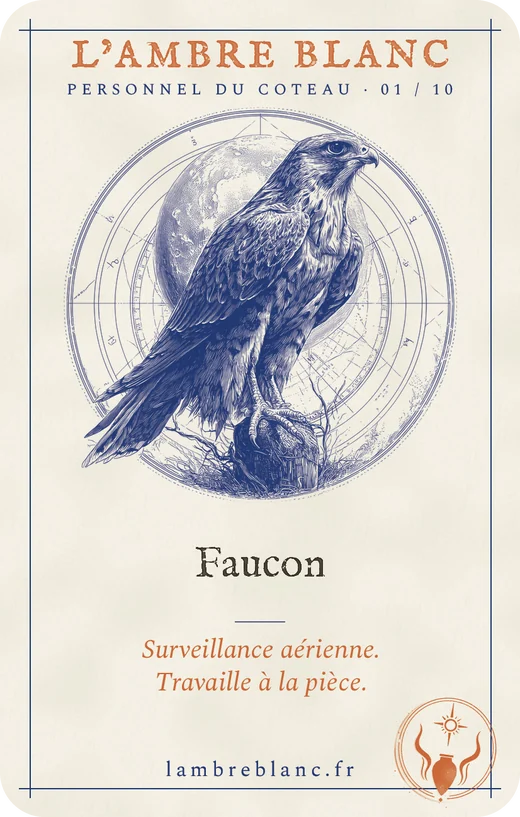
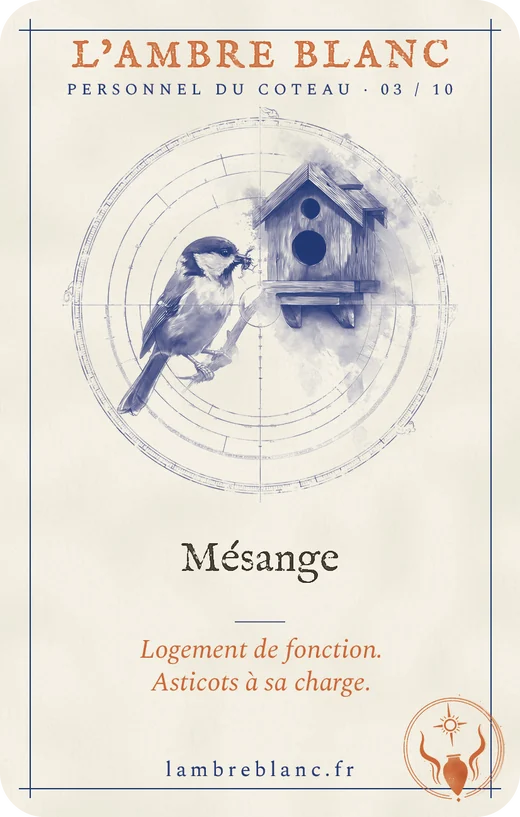
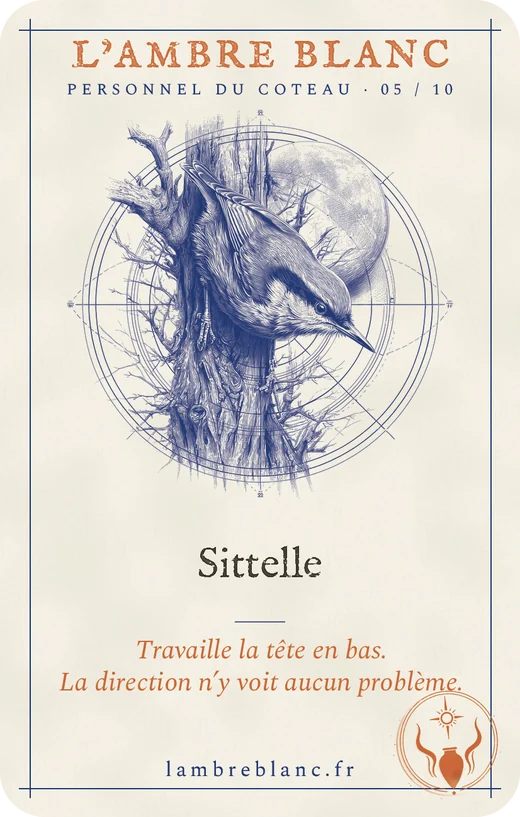
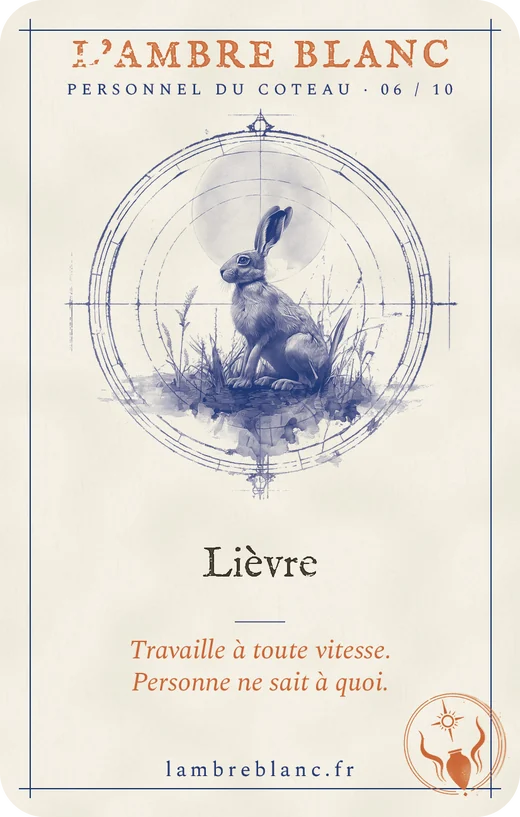
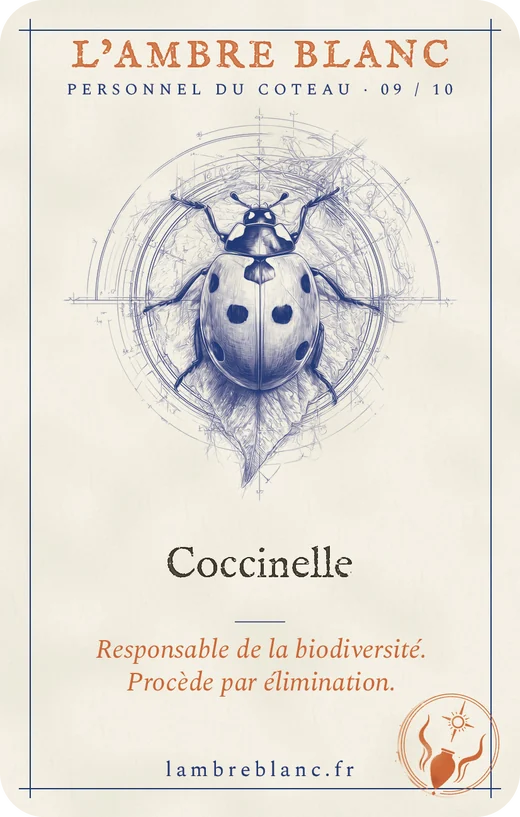
Between the rows, some sixty vineyard peach trees stand alongside apricot, walnut, damson, olive and apple trees and fruiting hedges: not as decoration, as neighbours. Nesting boxes dot the hillside; tits, robins and nuthatches do work that insecticides long claimed to do better. Hares, roe deer and falcons visit; lizards and ladybirds have moved in; snowdrops and wild flowers make a natural ground cover instead of weeding.
Fruit trees
Some sixty vineyard peach trees, apricot, damson, olive and apple trees.
Hedges and other plantings
Fruiting hedges, walnut trees.
Nesting boxes
Tits, robins, nuthatches.
Hillside wildlife
Hares, roe deer, falcons, ladybirds, lizards.
Natural ground cover
Snowdrops, wild flowers, no weeding.
The vineyard staff
Vintage 2026: the first chapter
2026 is l'ambre blanc's first estate harvest on the Stierkopf. Picking began on 20 August and ran until 10 September (late harvests aside). Not steady growth: a turning point. The négoce wines that gave birth to the project become a closed chapter; the cuvées from these vines take over.
Frequently asked questions
- Where is the Stierkopf?
- In Mutzig, at the mouth of the Bruche valley, Bas-Rhin, Alsace, a few kilometres from l'ambre blanc's cellar in Lutzelhouse.
- What is the soil of the Stierkopf?
- A Muschelkalk subsoil of marl, limestone and sandstone, on a steep due-south slope, between 150 and 300 metres on the plots l'ambre blanc works.
- Since when has l'ambre blanc worked the Stierkopf?
- Since February 2026, for 4 planted hectares, with a first estate harvest in autumn 2026.


