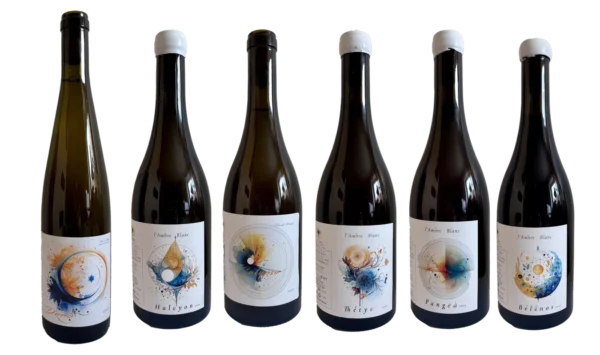
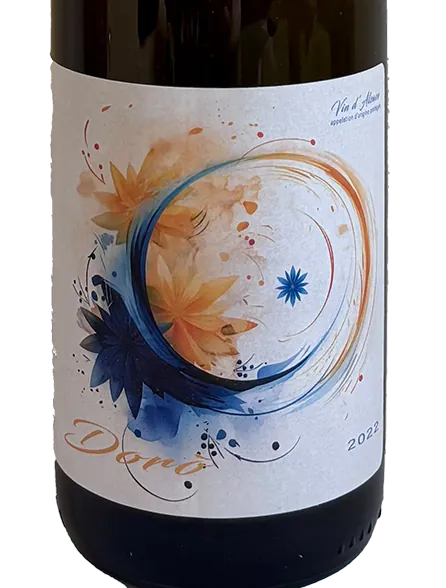
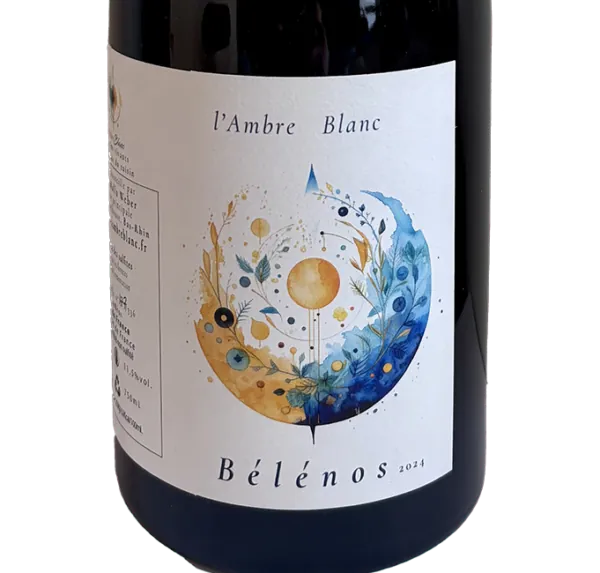
Plate II · Philosophy
Natural wine from Alsace: no additives, no filtering, no masking
Natural wine has no legal definition — at l'ambre blanc, it's a precise commitment: certified organic, hand-harvested, spontaneous fermentation, no additives, no added sulphites.
What is natural wine?
"Natural wine", "vin nature", "living wine": these terms have no official regulation in France, unlike the organic label. A consensus has nonetheless formed among winemakers in the movement: grapes from organic or biodynamic farming, hand-harvesting, spontaneous fermentation with the grape's own wild yeasts, no oenological additives, no filtration or fining, and no added sulphites (or only a trace).
At l'ambre blanc, these conditions apply to every cuvée. Only sulphur varies: most of our wines receive none, the others a pinch if needed, at the right moment; each wine's page says which.
The pillars of natural wine at l'ambre blanc
Certified organic farming
FR-BIO-01 — grapes bought from certified organic partner growers, and since 2026 our own organic vines on the Stierkopf.
100% hand harvest
Picked by hand, in small crates, to preserve each berry's integrity all the way to the cellar.
Spontaneous fermentation
No selected yeast is added: only the wild yeasts naturally present on the grapes and in the cellar do the work.
No oenological additives
No enzymes, no acid, no oak chips, no correction: the wine becomes whatever the grape and time make of it.
No filtration, no fining
The wine is bottled as it is — texture and matter intact, sometimes hazy, always alive.
No added sulphites
Our wines receive no added sulphites (they contain naturally occurring sulphites, produced by fermentation itself).
A free house, between Alsace and the Vosges
The l'ambre blanc cellar is housed in an 1817 stone barn in Lutzelhouse, in the Bruche valley. Some of our cuvées are aged in Georgian qvevris buried in the orchard-garden; the grapes come from our own vines on the Stierkopf, in Mutzig, and from partner plots selected with the same rigour.
Natural wine and orange wine: our macerations
Some of our whites ferment with their skins, like a red, notably in qvevri: this is what is called skin-contact wine, orange wine or, in Georgia, amber wine. The colour comes from the skins of the white grapes and the length of maceration; so does the texture. These cuvées are in our shop.
Frequently asked questions
- Does natural wine contain sulphites?
- Yes, naturally and in very small amounts: alcoholic fermentation always produces a little sulphur. The difference is that no sulphites are added by the winemaker, unlike most wine.
- Natural wine, organic wine, biodynamic wine: what's the difference?
- Since 2012, EU organic wine rules cover not only the vineyard but also the winemaking: a list of permitted additives and capped sulphite levels. Biodynamics (Demeter) does the same, with stricter rules. Natural wine has no official specification: it refers to winemaking with no additives or filtration and little or no added sulphites. Natural wine almost always starts from organic grapes.
- Why can natural wine look hazy?
- Because it is neither filtered nor stabilised: it keeps its yeasts and fine particles. A slight haze or a deposit is the mark of that, not a fault.
- Should natural wine be decanted?
- It's often recommended: a few minutes of aeration in a decanter opens up the aromatics and rounds out the texture, particularly for qvevri-aged cuvées.
- What is orange wine?
- A wine made from white grapes vinified like a red: the juice ferments with the skins, which give it its amber colour and its texture. It is also called skin-contact wine, or amber wine in Georgia.
- Where can I buy natural wine from Alsace?
- In our online shop (free delivery in France from €150), or at the cellar in Lutzelhouse, by appointment, 35 minutes from Strasbourg.